Netflix’s Big Live Event and a Small Payday

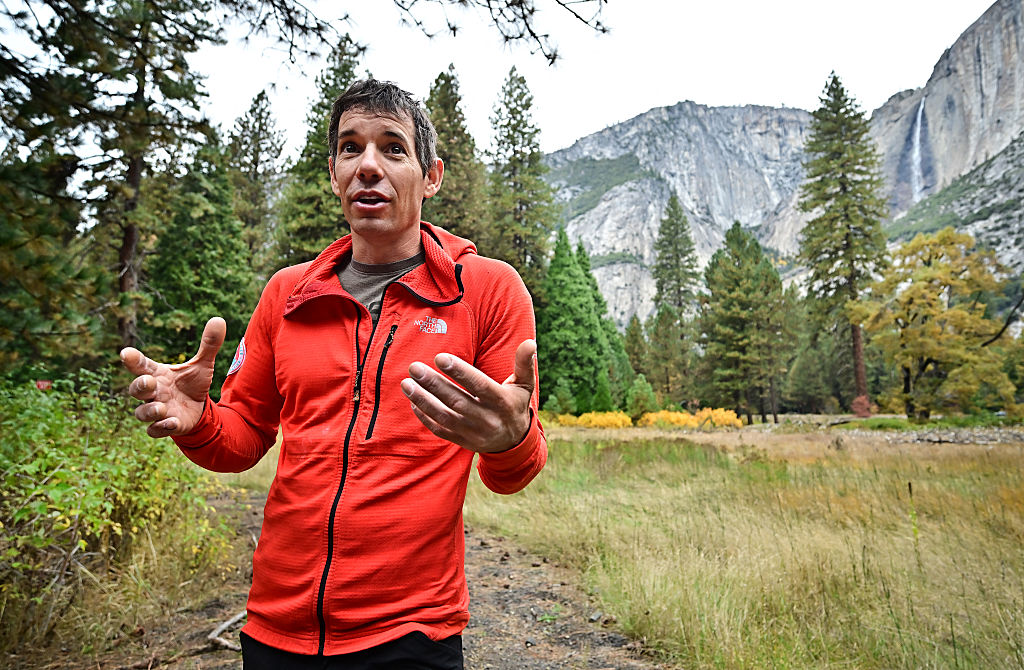
(Photo by FREDERIC J. BROWN/AFP via Getty Images)
On January 25, 2026, legendary rock climber Alex Honnold completed a dramatic, rope-free ascent of Taipei 101, the iconic 101-story skyscraper in Taipei, Taiwan. The climb was broadcast live on Netflix as part of a special called Skyscraper Live, drawing a global audience and major attention online.
But even with all that attention and the daring nature of the feat, what many people are buzzing about is how little Netflix reportedly paid Honnold for the stunt an amount he himself called “embarrassingly small.”
A “Modest” Check by Hollywood Standards
Honnold was non-specific about the exact number Netflix paid him for the climb, but multiple outlets cite interviews and reporting that he was paid in the mid-six figures generally understood to be somewhere around $400,000 to $600,000 USD. In context, that’s a lot of money for most careers, but it’s comparatively small when stacked against typical entertainment or sports contracts.
Honnold himself put it bluntly in comments attributed to an interview published in The New York Times: compared to contracts in major professional sports like baseball where players routinely sign deals worth eight figures or more his pay was “an embarrassingly small amount.”
Motivation Beyond Money
Part of the story here is Honnold’s own attitude toward the climb. In past interviews about the event, he made it clear that money wasn’t his motivation. He said he would have done the climb for free if the building owners had given him permission that he’s “not getting paid to climb the building” itself, but rather “for the spectacle.”
This fits Honnold’s broader persona in the climbing world: he’s been known for chasing extraordinary challenges purely for the physical and mental experience, long before he became a household name with Free Solo, the Oscar-winning documentary about his historic Yosemite climb.
What Happened During the Climb
Skyscraper Live aired the full 90-minute ascent, showcasing Honnold’s nerve and skill as he scaled the 1,667-foot (508 m) building without ropes or harnesses. He moved along architectural features, pausing at points to rest or chalk his hands, all while cameras captured every vertical meter of the journey.
The event combined elements of sport, spectacle, and live broadcast entertainment a mix that likely factors into how Netflix values and budgets such content.
Why It’s Sparking Debate
The headlines about Honnold’s “embarrassingly small” paycheck hit social media and news feeds for a few reasons:
-
Comparisons to mainstream sports: Many people point out that mid-six-figure payouts are minuscule next to multi-million-dollar contracts in major sports leagues.
-
The risk factor: Free soloing a skyscraper is extraordinarily dangerous. Some commenters argue that the reward should reflect that risk more than it does.
-
Content value vs. production cost: Netflix which is increasingly experimenting with live and sports-style programming may view this as a promotional event more than a traditional production, influencing how much it allocated for talent.
For Honnold himself, though, climbing whether for a camera crew or just for the pure challenge remains his focus.
Bottom Line
Netflix’s decision to pay Alex Honnold what he described as an “embarrassingly small amount” for his free-solo climb of Taipei 101 has become a story nearly as big as the climb itself. While the exact figure wasn’t fully disclosed, multiple news outlets report the payout in the mid-six figures, a sum that’s respectable in many industries but modest compared to major sports and entertainment contracts.
Ultimately, what Honnold gained and what audiences around the world witnessed was a breathtaking live event that pushed the boundaries of live broadcast and human performance. Whether that translates into broader recognition for climbing as a spectacle or higher paydays in the future remains to be seen.