Anatomy of the Universe Explained

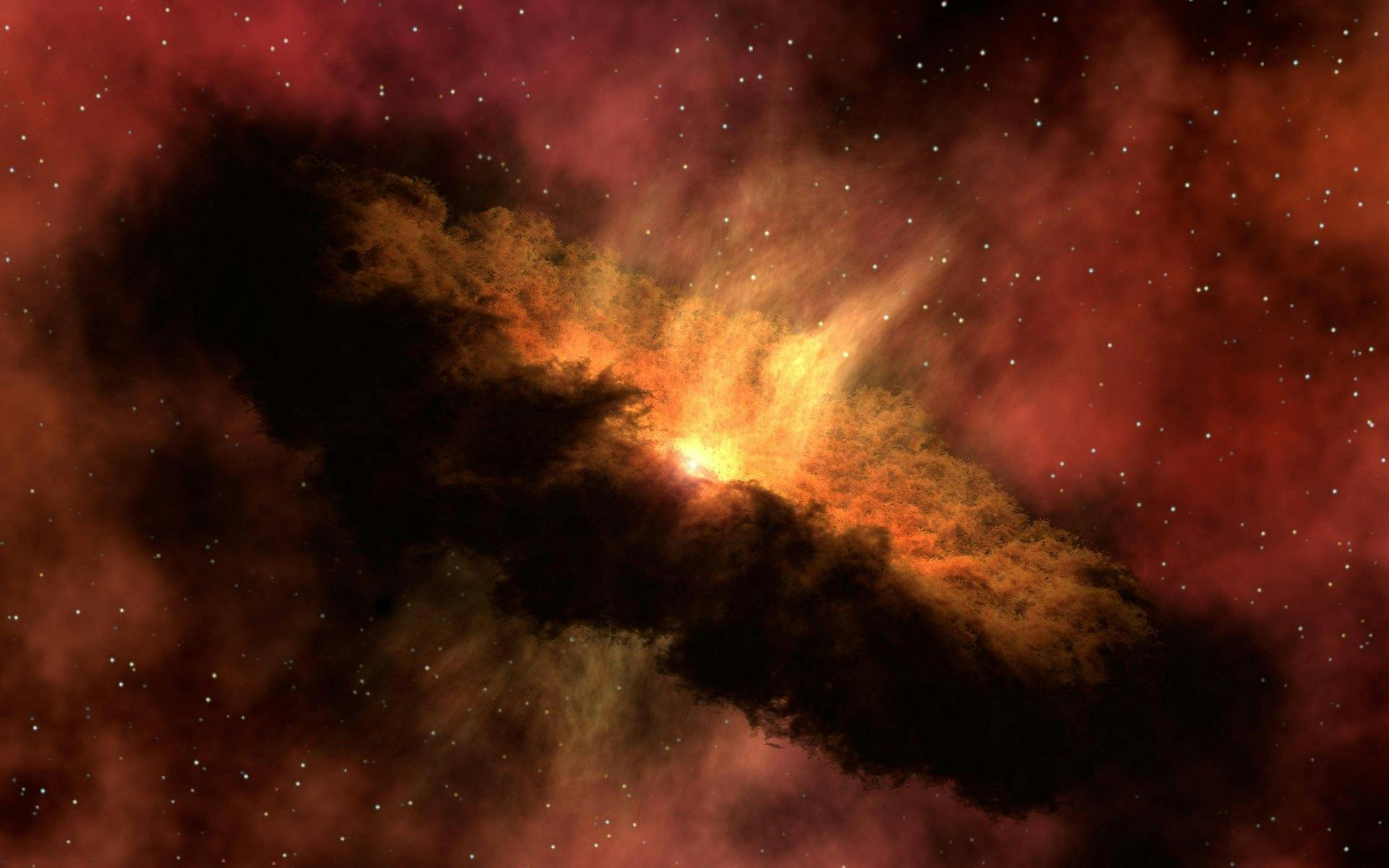
The UNIVERSE contained everything from the tiniest subatomic particle to the superclusters (largest known structures). No one can explain how big is the Universe, but our astronomers estimates it to be at least 125 billion galaxies, each containing at least 100 billion stars. The most accepted theory about the origins of the universe is the "BIG BANG" believed that the universe came to begin after a huge explosion which typically took place between 10-20 billion years ago.
The universe initially was just a huge dense fireball of expanding and cooling gases. After about 1 million years the gasses started to condense into localized clumps called protogalaxies. Which later condensed into galaxies, where the starts are born. Even today, billion years later the universe is still expanding although there are localized areas where areas are held due to gravity.
The Big Bang theory supports the radiation coming evenly from all directions which is believed to be the remanent ripple radiations produced during the big bang. These ripples in the temperature are thought to be the fluctuations in the universe resulted from the formation of the galaxies. Astronomers do not know if the universe will eventually stop expanding and begins to contract, or if it would expand infinitely.
Key Aspects of the Universe:
- Age and Origin: Billion Years old, initiated by the Big Bang, a rapid expansion of hot dense state of matter.
- Observable Universe: A Spherical region of the universe that can be observed from the Earth which stretches about 93 billion light years in diameter.
- Expansion: The universe is constantly expanding with distant galaxies receding faster than the light speed.
- Composition: Only 5% of the universe is ordinary (Baryonic) matter, while the remaining 95% is dark energy and dark matters which can not be observed directly.
- Structures: Contains everything from sub atomic particles o the large scaled structures like the galaxies and the galactic filaments.
- Evolution: Following the Big Bang, the universe is gradually cooled allowing the first starts to form and took roughly 400 million years.